Newsletter #10: Frühjahrssemester 26
Welcome
Dear members of the Department of Psychology,
The 10th newsletter of the Open Science Initiative (OSI) at the Department of Psychology promises to be an engaging read!
In this edition, we cover the Replication Game, a collaborative effort by the OSI and the Institute for Replication, Open Science in Developmental Research, and we pose the question: "Are your data stored safely in the United States?" Additionally, we invite everyone to participate in a survey on "Agile Research Data Management" (in German).
Please send any questions, suggestions, or contributions for this newsletter to openscience@psychologie.uzh.ch. The next newsletter will be released at the beginning of HS26.
Warm regards,
Your Open Science Initiative
Topics
Table of contents
Are your data stored in the United States?
Open Science Practices are undoubtedly beneficial, yet it is unwise to uncritically embrace everything labeled as Open Science as the ultimate solution (a realization we came to during Marc Rubin’s guest lecture last semester; see here for resources). When the President of the United States advocates for Open Science, it certainly piques interest (see a post by the Center for Open Science). This executive order has sparked concerns about various aspects of open science. One pressing question is the long-term integrity of data stored on servers in the United States. A post on the University of Geneva’s website addressed this issue last year. Like our colleagues at the University of Geneva, we believe it is prudent to remain informed and to deliberate carefully!
So, what alternatives to the Open Science Framework might researchers consider for publishing their data? In a previous newsletter, we discussed SWISSUbase (by the way, there’s a data-reuse competition for ECRs working with data published on SWISSUbase; learn more). Researchers from the PSYCH are already using SWISSUbase, for instance, in the prospective longitudinal study on relationships and stress (see here). Another European-based data repository is Zenodo, which asserts that "your research is stored safely for the future in CERN’s Data Centre for as long as CERN exists." This link directs you to the results of a search for "University of Zurich" AND Psychology on the Zenodo platform, demonstrating that some PSYCH members have already employed it in various ways.
Replication Games in Zurich on January 19th, 2026
On January 19, the Institute for Replication (i4replication) organized a Replication Game at the Department of Psychology. Around 30 researchers participated in person, while about 20 joined online for this hands-on event, aiming to replicate selected research articles from psychology and social sciences.
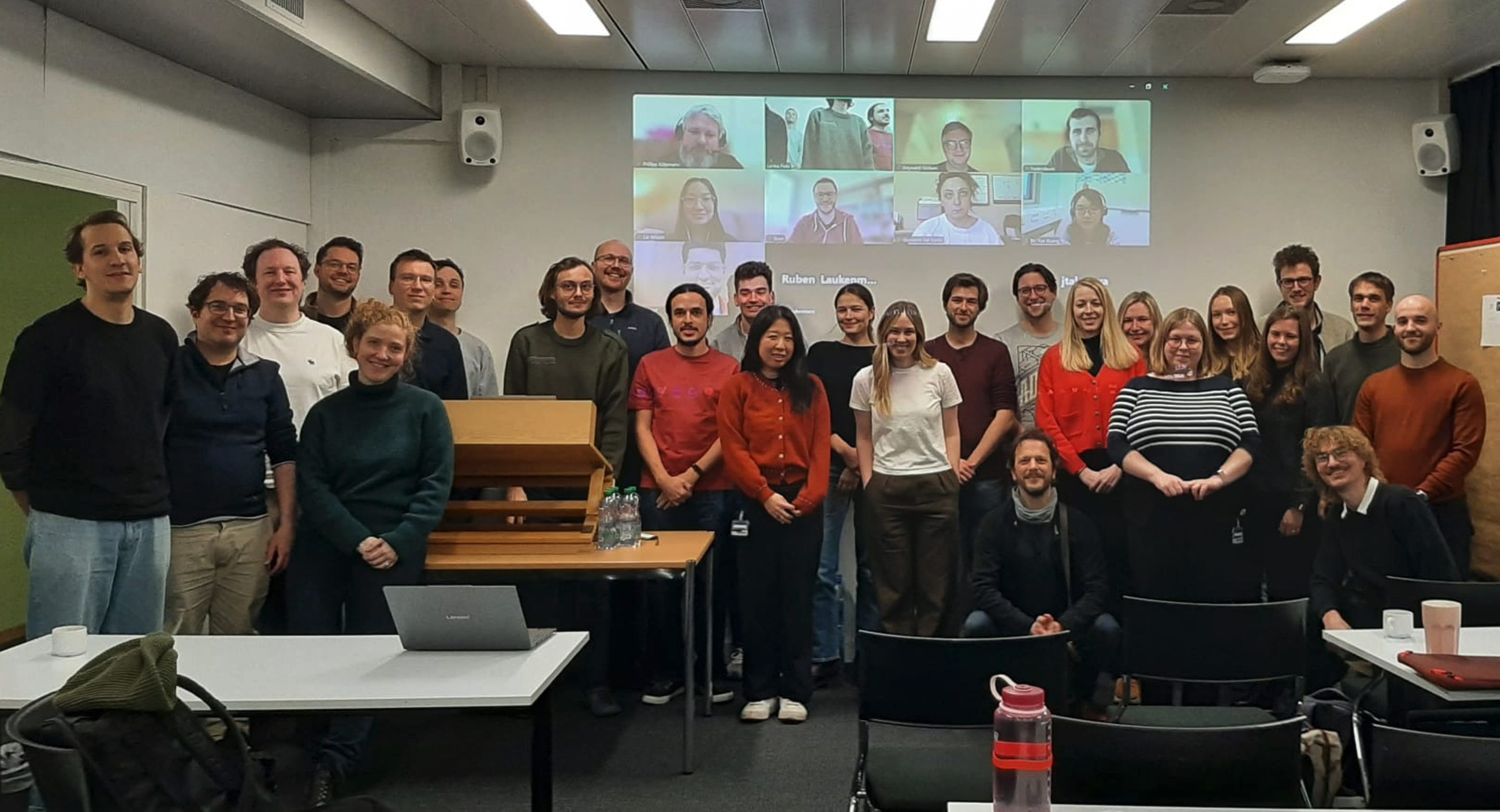
Participants, working in groups of two to five, embarked on replicating a study that was openly accessible. Initially, this task appeared straightforward, but the process soon revealed its complexity: Conducting a meaningful replication required articles with full access to data, analysis scripts, and comprehensive documentation. Once a suitable study was identified, each group spent the day reproducing the reported findings. This involved running the provided scripts, verifying whether the reported results could be reproduced, and conducting additional sensitivity analyses to test the robustness of the conclusions.
The experience was both challenging and enlightening. We gained insight into the crucial role of thorough data documentation and transparent analytic workflows for reproducibility. Simultaneously, we observed how easily inconsistencies, ambiguities, or errors can persist in published papers, underscoring why reproducibility is such a vital pillar of scientific progress. Another important takeaway was that even when papers are labeled as “open access,” they do not always meet the broader standards of open science: transparent, well-documented, and reusable research materials.
The teams are now finalizing their reproducibility reports. The next step will be for the i4replication to compile a meta-report summarizing the outcomes of all replications. We would like to thank the Institute for Replication for organizing such an engaging and instructive day!
If you are disappointed about missing this event, do not worry! You can visit i4replication’s website and register for any upcoming open replication games, in person or online.
Open Science in Developmental Research
In January, two of our OSI members delivered presentations at the 8th network meeting of the Developmental Science Network (DSN-ZH), where researchers from various disciplines at UZH explore human development. The central theme of the meeting was Open Science. Sebastian Horn delivered a keynote address discussing the balance between transparency and flexibility in Open Science. Joanna Rutkowska gave a brief talk on the open science practices employed by her research group, particularly focusing on developmental populations. You can access the slides from both presentations here.
The presentations and ensuing discussions highlighted a strong interest in open science practices within developmental research, while also emphasizing the need to tailor these practices to the field’s specific realities. Many open science tools were initially designed with young adult participants (e.g., students) and cross-sectional studies in mind, which can be completed relatively quickly. In contrast, developmental research often involves much longer time frames (e.g., longitudinal studies), dynamic changes in key variables that make single "time stamps" difficult to interpret, and participant groups that can be challenging to study (e.g., infants, very old adults). This often necessitates extensive experimenter training and can complicate the collection of large samples. Additionally, data in developmental and educational research frequently include sensitive materials, such as interviews or video recordings of children and their families, which means full public openness may conflict with privacy requirements. Promising approaches discussed at the meeting included modular preregistrations (i.e., preregistering a study in several stages or updating analysis plans across project phases), controlled-access repositories (i.e., secure repositories where data are shared only with approved users under specific conditions), and collaborative projects (such as "ManyBabies"), where multiple labs collaborate on demanding data collections to increase sample sizes and enhance the robustness of findings.
The meeting reflects a growing interest in Open Science among researchers from various fields in Zurich, including developmental and educational science.
Survey on Agile Research Data Management
Several OSI members have taken part in a Delphi Study to assist open science experts at LMU in developing a course on Agile Research Data Management. We believe such a course would be highly beneficial for everyone at PSYCH. Therefore, we encourage you to participate in a survey on this topic, which could lead to further enhancements. This survey is available only in German: surveys.osc.lmu.de/AgileRDM-Kursumfrage
Beschreibung der Umfrage:
"Das Ziel unseres Projekts ist die Entwicklung eines bedarfsorientierten, agilen Kurses zum Thema Forschungsdatenmanagement in der quantitativen psychologischen Forschung. Unsere Zielgruppen sind Promovierende, Postdocs und PIs. In dieser Umfrage möchten wir testen, wie verschiedene Kursvarianten bei potenziellen Teilnehmenden ankommen. Die Umfrage dauert 15-20 Minuten. Wir verlosen 4 x 50 Euro Gutscheine unter den Teilnehmenden."
Upcoming Events
- On April 23rd at 4 pm in BIN-0-K.02, Thom Volker from Utrecht University will present a talk titled "Promises and pitfalls of synthetic data for open science." This promises to be an intriguing session, as synthetic data offers a promising solution to the conflict between open data and privacy protection.
- On May 5th, from 2 to 3 pm, OSI member Robin Segerer will provide a brief online introduction to PsycINFO via Ovid. The session will cover the new interface, the basic search syntax, and the main differences compared with EBSCO: https://veranstaltungen.ub.uzh.ch/angebot/details/68300?angebotTitel=psycinfo-via-ovid---a-compact-introduction-for-study-and-teaching&modulId=6114
- This year’s Open Science Prizes will be awarded on May 27th at the ExPra-Kongress and MaDoKo. The application form is currently under review and revision, but applications for next year's Open Science Prizes should soon be possible again.
- There are several fascinating talks coming up as part of the ReproducibiliTea, jointly organized by the universities of Basel and Zurich. Check out their detailed program: https://www.crs.uzh.ch/en/training/ReproducibiliTea.html
Final words
This newsletter is published once a semester – feel free to contact us if you have any questions regarding it:openscience@psychologie.uzh.ch.
As this newsletter is only published once per semester, we are unable to inform you about events scheduled at (rather) short notice. Thus, we recommend subscribing to the mailing list of UZH’s Center for Reproducible Science to stay up to date on offers for further training and scientific exchange on open science at UZH, such as the ReproducibiliTea Journal Club.
Current members of the open science initiative
Prof. Dr. Johannes Ullrich (Leitung); Dr. Walter Bierbauer; Prof. Dr. Renato Frey; Dr. Martin Götz; M.Sc. Patrick Höhener; Dr. Sebastian Horn; Dr. Lisa Kaufmann; M.Sc. Sophie Kittelberger; Dr. André Kretzschmar; M.Sc. Pascal Küng; Prof. Dr. Nicolas Langer; Dr. Susan Mérillat; Dr. Joanna Rutkowska; Dr. Robin Segerer; Prof. Dr. Carolin Strobl; Dr. Lisa Wagner; M.Sc. Jasmin Weber; Dr. Katharina Weitkamp; M.Sc. Natascha Wettstein